
via Gannett News Service

What used to be Johnnie’s Lounge at 3425 N. Lincoln is empty now, though a fading Hamm’s Beer sign still hangs over its locked door. Paulie’s Place at 1750 S. Union is vacant. So is the spot once occupied by MaxTavern at 2856 N. Racine.

Neighborhood taverns, which for generations were cornerstones of Chicago’s ethnic communities, are being squeezed out by the economy, gentrification, changing tastes and city regulations that make it more difficult to operate in residential areas.

“Hopefully, they won’t disappear,” said Scott Martin, owner of Simon’s Tavern at Foster and Clark, which has served patrons in Andersonville, once a Swedish enclave, since 1934.

It’s a cliché, said Martin, 51, but “it’s great to go someplace where everybody knows your name.”

It’s still possible to find old-school taverns that cater to neighborhoods and serve inexpensive beverages, said Sean Parnell, who wrote the 2010 book Historic Bars of Chicago and runs the Chicago Bar Project, which chronicles the city’s bar scene and tracks the demise of such spots.

“There aren’t many of them around anymore,” he says. “You really can’t get a tavern license in areas that have regentrified…and the costs for licensing and insurance have really gone up.”

Bob Smerch closed Sterch’s at 2238 N. Lincoln — which combined his name with that of a partner named Stern — a couple of years ago with great reluctance after 38 years in business. “It was a neighborhood joint where everybody knew everybody,” said Smerch, 70. “I miss it horribly.” Today, he said, “people want bars now that focus on 20- or 30-year-olds and are so different from the ones that were.”

In the days before television, people — mostly men — sought diversions in neighborhood taverns, said Michael Ebner, history professor emeritus at Lake Forest College.

“There was a degree of camaraderie there and a sense of neighborliness as well,” he said. “The social bonds that evolved…were quite enduring.”

Home-cooked meals often were available at taverns, which became hubs of political activity and, eventually, places to watch sports events on TV.

“The tradition lives on, but in sharply diminished proportion,” Ebner said.

In 1990, about 3,300 Chicago establishments had tavern licenses allowing them to serve alcoholic beverages; places that also offer live entertainment, charge admission or serve food as a primary source of business require different or additional licenses.

The number diminished as city leaders sought closure of bars that prompted police calls or complaints from neighbors, and since 2009, the number of tavern licenses has held steady at about 1,200.

There are about 5,000 businesses in the city that sell alcohol, including package goods stores, taverns, clubs and restaurants.

Opening or buying a tavern in Chicago can be complicated, said Mike Costanzo, a real estate broker with Jameson Commercial. Aldermen can seek liquor license moratoriums in areas as small as two blocks, and buyers are required to purchase the corporate entity that owns an existing tavern and license, he said.

“Getting a new tavern license issued in a residential neighborhood is brutal,” Costanzo said. “It’s virtually impossible.”

Ebner hopes Chicago’s remaining taverns can survive. If people stay home instead of patronizing neighborhood pubs, he said, “it really fosters a sense of personal isolation.”

Martin says the survival of the city’s sense of community is at stake. When he bought Simon’s Tavern 17 years ago, he found a shoebox containing $80,000 in IOUs. When a longtime patron died, he and his other customers gave the man, who had no family, a funeral.

When he was growing up in the neighborhood, Martin said, there were 15 bars on the street where Simon’s Tavern is located.

“They’re all gone,” he said.

—Judy Keen

_____________
Courtesy of our Chicago Guy, Paul Ciminero; from The Chicago Sun Times 2/18/12.

{ 0 comments }

Arrived in Okeechobee, a source of craft beer frustration on previous visits. Still haven’t found, as of yet, any local craft brew. I know, or rather hope, we’ll hear from our facebook and Twitter pal, Beer in Florida with some notes for us, and we’ll look harder. The good news, however, is that when visiting the local ABC store, we found them carrying a couple interesting entries since we last visited. The first, one that really excited me, was Samuel Adams Wee Heavy, a terrific brew we may be going back for before we leave. Then we spied a bunch of offerings from Roscoe’s Hop House.  Interestingly, we’d never seen it up north, but they’re located in Rochester, New York.

I picked up a 6 of their IPA. We then had another great discovery, just around the corner from all-girl-stuff consignment shop, Toni’s Chic Boutique … the Tobacco Place.

“The Place” has real cigars. There’s a cigar lounge where I think you might be able to have a glass of wine or ale and relax, but the important thing on this day was… fresh, well kept cigars. I bought a tin of La Gloria Cubana Series R Pequenos, thanked the lady there for living, and went home.

Later, after the IPA had chilled to a reasonable temperature, I cracked one, poured, and unwrapped one of the pequenos. I’m thinking this is a not great, but good IPA. The pour was fine, nothing spectacular, no epic head and/or lacing, the nose, again, typical IPA, sweet and gently hoppy. The taste was very mild. The front of the sip reflected the nose, a tasty citrus, the middle offered little of interest, but the tail end gave up a really nice, solid bitter.

I lit the pequeno, my first time for these. Not cheap, the first scent and draw tell you why. These are big little guys. The Dominican filler clearly has some age on it. A far more aggressive and seasoned offering than the gentle, sweet Cohiba pequenos we had last time out. Truly delicious and spicy enough that it brought out the sweetness in the middle of Roscoe’s IPA, turning it into a completely different brew.

For a northern boy, sitting on a screened porch in February, 80 degrees, smoking and sipping this combo was a true pleasure. Think I’ll do it again today. Later, I had another of these IPAs with a salty, spicy dinner, and while it didn’t thrill, it did it’s job.

The story for this writer, however, is the fact that under the Roscoe’s Hop House mantle,  there are more than a couple awards, most notably for their Pale Ale. I’m posting on facebook and looking here for any insights into these beers not being brewed by Roscoes, but for them by World Brews in Novato, California. I understand a big grocery chain like Trader Joe’s private labeling from outside brewers like Firestone-Walker, or if a smaller brewer, having someone outside do their bottling and canning, but I find having your business be as a brewery in Rochester, NY yet have your beer brewed by someone else in California a bit of a head scratcher. Anyone?

Still, a good drink, and given the awards, we’ll need to try the Pale Ale.

{ 0 comments }

A couple well known brewers in Northern Ohio that have a pretty high profile in these parts are Great Lakes Brewing  out of Cleveland, and Thirsty Dog in downtown Akron. Both are brewing some fabulous beers. But there’s a third, located on the fringes of Greater Akron near the southern border of Summit County. They have a fun but goofy label, generally big flavor, high ABVs and only bottle in 22 ouncers… and they have been over the last few years, the most highly regarded brewer in the state. Truth be told, one of the best in the world! It’s called Hoppin’ Frog, and ratebeer.com has placed it as the #20 best brewer in the world, and their Barrel Aged B.O.R.I.S. the Crusher the 32nd best beer, period.

I haven’t talked much about them because I often don’t have anyone to share a 22 with, and as professed more than once in these posts, I’m something of a cheap date, and HATE to waste beer. I’d had a couple of Hoppin’ Frog’s offerings quite a while ago at the legendary Luigi’s and liked it a lot, but I wasn’t writing and reviewing at the time.

So, with people coming over last Sunday, I decided to open and share HF’s Silk Porter. Interestingly, that’s the right word to describe it, as it is one smooth, silky beverage. It’s got a 6.2% ABV, a low bitter at 26 IBUs, and while it has what we would expect in a porter, a higher relative level of malt, that good roasted, slightly sweet taste of darkness, the thing that made it work best for me was that it’s not typical of what the world of porters have largely become. The usual spectacle these days offers the big bang of coffee and chocolate, both milk and dark, sometimes so dark you can taste the expresso mud or the powder of Baker’s Chocolate on your tongue. This isn’t to say these can’t be awesome qualities. Some of my favorite brews of all time have these huge personalities.

But Hoppin’ Frog’s Silk Porter is a smooth operator. All these qualities are there, but from end-to-end, the subtleties of this fine offering from one of the world’s best brewers is what makes it stand out. Delicious.

Viking Fun

After dinner there were enough of us here who, allegedly, were game to open a contribution from YBN stalwart Big Carl, our Whole Foods Rockin’ Food & Beer Maven. Carl told me I had to share. Pretty funny as it’s become clear this was another one that required sharing…in spades. From Dansk Mjod, in Denmark, comes Mead, Nordic Honeywine with Ginger and Hops. From the brewer:

The oldest known recipe for mead to be written down in the Nordic countries was in 1520 by the Archbishop Olaus Magnus. The recipe comprised of water, honey, hops and brewers yeast, and concludes, that “on the eight day – or earlier in emergencies – the mead may be drunk, but the longer it is left, the purer, better and healthier it will be.” Our products are brewed based on a recipe from about year 1700, and the ingredients are pure and 100 pct. natural – guaranteed free from additives of any kind. Honey is the major and most important item in the recipe.

At 19% ABV in a 750ml bottle, this was shared by a bunch of us. I poured maybe five tasters, mine the only one I filled, as I’m a pro and I needed a pro portion to evaluate. Right, big fella. It goes without saying that the nose was of honey. All but one (a honey hater) sniffed and sighed an expectant “mmmmmm.” No head, minimal carbonation, and poured like apple juice. First sip confirmed honey, and alcohol was the statement here. Delicious, STRONG, with a bit of ginger coming through, and really STRONG. We couldn’t tell if there was enough of a hops component to be contributing to the nose, and this was so honey-sweet and STRONG, there was no telling if hops contributed much to the flavor. No one finished his/her glasses and no one had more than maybe 3 oz to start. I can’t remember if I finished mine, but I know as the night wore on, and I would occasionally collect stray dishes and glasses to take into the kitchen, I’d run into the odd mead taster and have yet another sip. This mead was delicious, STRONG, too sweet to be taken in large doses by yours truly and apparently all his family and friends as the one actual Viking in the family is now a tea totaller… which, now that I think about it, might effect his “active” status.

As I write this, 20 odd hours after opening it, I JUST popped the cork and, excited to find some left, took a draw from the bottle. Room temperature, the honey flavor is even more amazing, the burn on the tongue from the ginger and the warmth as the high alcohol goes down making for  an extraordinary elixir, but the one swig will do me for now. By Thor’s Hammer, everyone simply MUST have at least that one swig!

Kimono My House

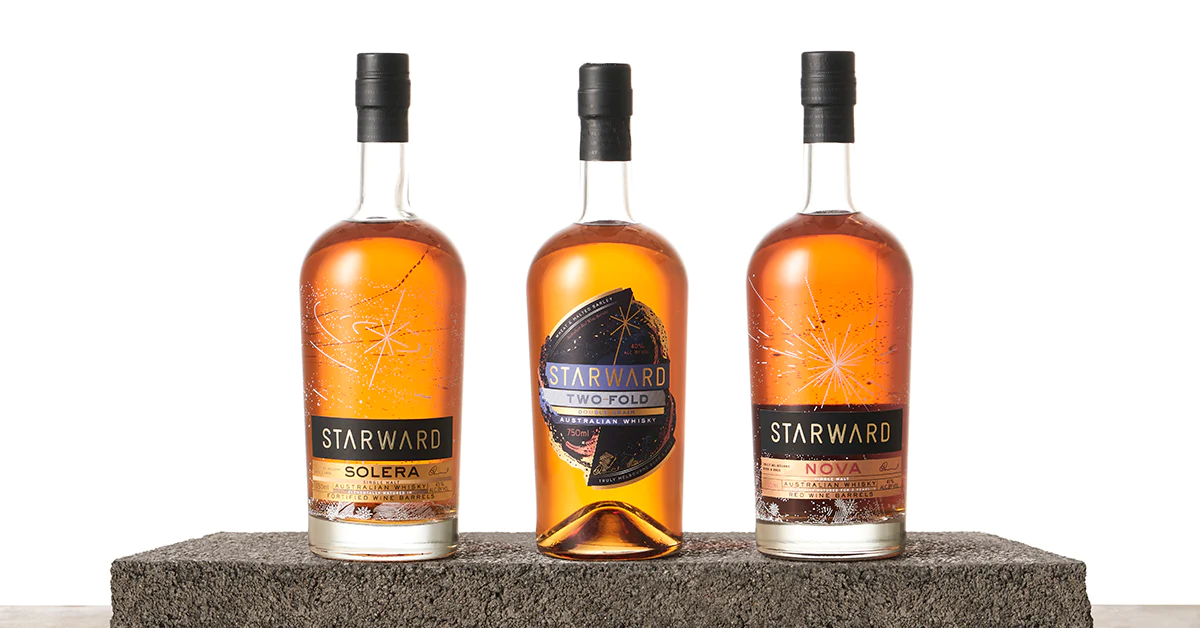
Aside from using the title of this section to tout a wonderful old album with a special cover from the band Sparks, we’re touching on a little number we shared earlier in the evening. Our dear friends, Chef Joe and wife Emiko returned from Japan with a wonderful treat, The Hakushu 10-year-old Single Malt Whisky, from Suntory.

They don’t call it Scotch Whiskey, presumably because this doesn’t come from Scotland. If you go to their site they take pains to discuss the “art of Japanese Whiskey” so I’ll not waste your time here on that subject.

What I will say is that the experience of drinking Hakashu feels very Japanese, or at least how I sometimes think about Japan. First, any smokiness they claim was pretty much lost on me. After all, they have no Islay peat, so…. and if they age this in wood casks, I don’t taste it – certainly no oak. So treating it as a very different animal from the Laphroiag, Mortlach, and Bowmore that top our list of favorites is a good idea and in doing so it did not, by any means, disappoint.

Pouring a clean crisp gold, the Hakashu has a pleasant, not terribly alcoholic nose. We went neat with literally a drop of water in the glass. It’s odd writing this just after our conversation about Mead, as the overwhelming consideration in the flavor of this Single Malt was how sweet it is. Very clean on the palate, crisp, sweet, no standalone alcohol presence to claw through… an incredibly well mannered, everything in the right place, sweet and delicious whisky. You’re not going to go out and get hammered on it. You’re going to sip it and gently smile.

Half joking, after taking a sip, I grabbed up my accomplice’s Lagunitas IPAfor a chaser. This was a terrible idea. It was like applying sandpaper to a pearl. And there we have it, all that sterotypical Japanese imagery comes roaring in with that last sentence. But it was true. The Lagunitas is a nice IPA. That combo was still an awful idea. Im going to have to think long, hard, and probably much lighter than our usual wont to come up with a shot and a beer pairing with this lovely, delicately balanced whisky. Thanks Joe/Thanks Emi. And a respectful bow to Hakushu.

{ 0 comments }

OK, before I get started here I must clarify a couple things.

- I don’t seek out “novelty” beers.  Even though this one has the looks and the name of one, it’s far from it.  I believe that there are so many craft brewers putting out amazing product that the pressure to come up with a recipe that will not only be good, but be different and help a brewer stand out, can be huge.
- I don’t like to read reviews.  Whether it’s reviews on beer, music, movies, restaurants, whatever, I refrain from reading them as I like to go in “clean.”  I’ll read them AFTER I’ve had the opportunity to experience or taste things myself.

Now, with that said, I present what I’m calling “breakfast in a bottle,”  Rogue Voodoo Doughnut Maple Bacon Ale. The bottle in question is pink. and with the pigs and maple leaves on the label you may say to yourself…novelty beer.

Photo Courtesy of BREWPUBLIC.com

But hold on! Even with an inescapable air of novelty,  Rogue Voodoo Doughnut Maple Bacon Ale was fantastic!  From the moment I popped the cap, even without pouring it into the glass, you can smell a sweet, maple syrup aroma that not only grabs your nose, but your taste buds begin to water and your stomach is asking for pancakes.  When poured in the glass, a whole different aroma comes through, still sweet but very smoky, not unlike the smoke beer we lovingly reviewed from Schlenkerla.  A deep orange color, the aroma literally filled the room as if someone was cooking what could only be described as some sort of smoked pork product.  Bacon, sausage, honey ham?  Take your pick, it really doesn’t matter.

That first sip? Wow!  All of everything I described bounced off every taste bud on the tongue to such a degree that I just had to savor it and wait until my brain could catch up to what I just drank.  I tasted the smoked bacon first and then it was followed by a sweet shot of maple… incredible!

But there is just so much more, considering the 13 notable ingredients used in this collaboration between Rogue and the (in?)famous Voodoo Doughnut stores in Portland and Eugene Oregon.  They created a monster of an ale using:  Briess Cherrywood Smoked Malt, Weyermann Beechwood Smoked Malt, House-smoked Hickory Malt, Great Western 2 Row, Munich, C15, C75 Malts; Applewood-Smoked Bacon, Pure Maple Flavoring, Rogue Micro Hopyard Revolution & Independent Hops, Free Range Coastal Water & Pacman Yeast.

For more information about Voodoo Doughnut, go to their website, http://voodoodoughnut.com/about.php and check out their creations.  With an ABV of 5.6, this is a great beer to “start off your day.”  I also think using this in your batter would make some remarkable pancakes!  Rogue suggests you pair it with doughnuts and pork.  This is  a great offering for the open minded beer lover because sometimes we just want something different.  I think I hear the breakfast bell, time for another… novel… Maple Bacon Ale!

{ 0 comments }

    Had a GREAT couple hours hanging with writer Rick Armon, from the Akron Beacon Journal, commander of the blog, Ohio Breweries, and the book of the same name. We didn’t drink any beer, Rick nursing a cold, and we recovering from an …                           AWESOME night shooting material at The Lockview for the sizzle tape/pilot we started a while back at Church Brew Works in Pittsburgh. In addition to the people at Lockview totally kicking ass to accommodate us, Rubber City Productions stepping up to the plate to get our shots, and a great group of patrons there to help us out, we tried a couple new taste sensations.

The first was Founders Double Trouble, an Imperial Double IPA that was delicious. 9.4% ABV and 86 IBUs, much like a favorite big IPA, Bell’s Hopslam, this has the huge floral and citrus nose, taste and bitterness, but the sweetness down the middle and in this , from the tap offering, an almost creamy mouthfeel, a simply beautiful, balanced  brew.

On Location: Director Frank Macias, 2nd from left. Producer Harvey Gold, right.

Then we tried Victory Golden Monkey. A Belgian Tripel, with a 9.5%ABV, a very mild tasting brew. Light in mouthfeel, nothing about it reflecting the alcohol level, or even some of the vividness of flavor we’ve grown accustomed to in a trippel. Yet, in a fine mood, as we were being productive, festive and of good spirit, I thought of it more as a nice drinking beer… almost a rare session beer presenting Belgian flavor notes… until I learned how high the alcohol level was. While I enjoyed it, I’m thinking that what I liked about it wasn’t what Victory was looking to accomplish here.

Still and all, a great time and some great footage!

{ 2 comments }

…Beer and the Doctor

Dr. Carol as an Intern Fall 1979

Alcoholic beverages have been a part of our human lives since the beginning of civilization, when we first learned to cultivate grains.  Shortly thereafter we learned how to ferment grain into alcohol. The art of medicine probably began at the same time, when we learned how to care for the sick, providing comfort and relief of pain. Alcohol was undoubtedly one of the first medicines. Since that time, the medical arts and alcohol have been linked, if only because they are an integral part of human existence. Fast forward to the present time.

This is a semi-autobiographical collection of notes about my life as a doctor. Beer or other spirits are a common thread in the stories, sometimes causative, mostly coincidental.  The stories are mostly true, though the names have been changed.

Beer, anyone?

Dad & Bubbly Summer 1976

I grew up in ethnic, Polish Chicago, where beer drinking is a way of life.  Except in our house.  We drank champagne. Not just for special occasions, but any time where a beer would be called for.  It started with my Uncle Rory.  I remember Saturday evenings as a child, when Rory would show up to the house with a couple of six-packs, and he and my folks would drink into the night, talking and laughing. Everyone loved Uncle Rory, but it was common knowledge that he drank too much. One evening he brought a few bottles of cheap champagne. From then on, the Saturday evening parties continued with champagne instead of beer.  Years later I asked my father why the switch from beer to champagne. “That’s because Rory’s doctor said he drank too much beer, and if he didn’t stop it would kill him.  So he switched to champagne.”

A tough place to study

I studied medicine in one of the toughest hospitals in Chicago–Billings Hospital, at the University of Chicago.  Now an elite “Center for Advanced Medicine,” in the 70’s it served as a community hospital for one of the poorest neighborhoods in the city, and one of the toughest.  This was Hyde Park-Kenwood, long before it gentrified and became a suitable home for president Obama and his family.  Crime, drugs, alcoholism, and gunshot wounds were common, even among the hospital employees. One week we had more fatal gunshot wounds among the hospital cafeteria workers than in the emergency department. One was a drug-related shooting in the cafeteria, and in the other instance, a jealous husband shot his wife’s lover in a drunken rage; both worked in the hospital cafeteria.  After that I brought my lunch from home.

Drinking with my cadaver-mates

I didn’t really drink until medical school. Drinking with the other med students is a big part of the bonding experience. Four of us had all been partners on the same cadaver—two on the right side and two on the left—and we would do everything together. In fact, I married my other half on the right side. Typically, we would join the other  med students at Jimmy’s bar to unwind after an exam.  But once we went out for a drink before an exam.   It was the night before Part I of the National Board exams, in our second year of medical school. This was an important test, a “make-or-break” for doctors. “Where shall we study for The Boards?” I asked.  Jeffrey, my left-cadaver partner, said, “Carol, if we don’t know the material by now we’ll never learn it tonight.  Let’s go for a drink instead.”  Who could argue with the logic?  We had a drink at the bar — we were the only med students there.  Then we went to see “The Exorcist,” which had just opened.  We all passed our Boards.

Two guys walk into a bar and end up in the emergency room

Medical students who were on their surgical rotations were encouraged to hang around the emergency room to help out, and possibly get a chance to practice surgery. Weekends were the best time. One Saturday night the cops brought in two men with facial cuts that they got during a bar fight. They both needed to get stitches, and they were very intoxicated. They were put onto adjacent beds in the emergency ward, separated by privacy curtains–we didn’t have individual emergency room beds in those days. I helped the surgeon start the stitching, and then he let me take over on my own. Since they were on adjacent beds I was allowed to do both.   I did a careful job and was very proud of my work, and I threw the curtains back to show it off to the attending surgeon.  At that point, the two patients recognized each other—it turns out they had been fighting each other! They tried to jump out of bed to continue their fight, and I was caught in the middle.  I learned another lesson that night–it’s very easy to subdue a belligerent drunk, since they aren’t coordinated enough to do any harm.  I just used my loudest “mom” voice, scolded them for fighting, and put them back to bed to sleep it off.

Death by aerosol

As a medical student I did a 2-week rotation on the inpatient psychiatric ward at Billings hospital. It was a locked ward. Our job was to look after the physical health of our patients, while learning as much as we could about their psychiatric illness. I was assigned to Frank, a pleasant, 50-something man who seemed perfectly normal. Many people with psychiatric illness drink excessively, and Frank was no exception, though he had no trouble stopping when he checked himself into the ward. He was just a regular guy from an ethnic neighborhood in Chicago, a retired factory worker who spent his days at his local bar.  Frank told me there was absolutely nothing wrong with him.  He claimed he had no psychiatric problems, he was just hiding out at the hospital so his brother-in-law couldn’t find him and kill him.  Frank claimed that the brother-in-law had an aerosol can filled with a deadly poison and was following him in close pursuit, trying to spray him to death.  To avoid this, he took 3 different buses, in several different directions, running miles on foot between bus stops, until he reached the hospital and voluntarily signed himself into the locked ward for protection.  Frank had what is called “a fixed paranoid schizophrenic delusion.” Except for this one obsession, everything else about his mental state was normal and coherent.  He was convinced, and convincing.  I was afraid for him to be discharged from the ward — because what if he was correct?

Euphemistically speaking

As interns, it was our job to admit patients to the hospital and manage them during their stay.  We were on call to take new admissions every third day; most of our admissions came in from the emergency room, which was used by most local residents in place of a primary care physician.  Most came in at night.  On those days we’d be up all night, to take new patients, evaluate their medical problems, and start their treatment.  In the morning, bright and early, we would go around with the attending physician and the rest of the doctors to see the patients, who would then assist in their diagnosis and management. The challenge was to discuss the case at the bedside, in front of the patient.  We became adept at using Greek and Latin phrases, and euphemisms to discuss sensitive medical details in front of a patient.  A typical presentation:

“This 60-year old man, a known habitual user of two-carbon fragments, presented to the emergency room with hallucinosis and odor spiritus fermentum. His BAC was .16.  He was started on prophylactic diazepam and IV thiamine, to prevent delerium tremens and Korsakoff’s.  We are monitoring his BAC pending discharge.”

The old drunk would lie in bed smiling, enjoying the attention, impressed and pleased that his doctors were discussing him in Latin, totally oblivious to the true meaning of the discussion.

Translation: “This patient, a known alcoholic, showed up in the emergency room seeing pink elephants, and smelling of alcohol.  He was drunk at twice the legal limit.  We gave him Valium to stop the DT’s, and vitamins to prevent further brain damage. We are letting him sleep it off until his alcohol level drops low enough for discharge. “

The Animal

I was called to the Emergency Room late one night for my next admission, a big brute of a guy with head trauma who had to be admitted for observation.  We interns usually ended up transporting our own patients from the ER to the ward, since the patient transport service was slow and lazy, and patients could die waiting for them (literally).  They handed Tyrone off to me on a gurney, told me his nickname was “The Animal” and that he was ready to go except for a small detail–he had to have head X-rays to make sure he didn’t have a skull fracture. It appears that he fell off a second story balcony, but was so drunk that he didn’t feel a thing.  Apparently this was not the first time it happened.  The Emergency Room staff was unable to get this burly, muscular, 250-lb man to cooperate for his X-rays, as he tried to hit anyone who came near and he was too heavy to lift. So now it was my problem.  Fortunately, his wife showed up, all 300 lbs of her.  She barged into his room, scolded him for giving the doctors trouble, grabbed him by the ear and led him to the X-ray machine.  Cowered, he followed meekly.  Fortunately, his X-rays were normal and we brought him to his room to sleep it off.

Addicts, needles and antibiotics

There were many heroin addicts in our neighborhood.  They had no regular medical care, and used the Emergency Room as their primary care physician.  Addicts frequently developed serious medical problems as a result of sharing needles. A blood infection which settles on the heart, bacterial endocarditis, was one of the most dreaded This was in the days before AIDS (which later killed many of them). We had a rule: if an IV drug user showed up with a fever that lasted more than a couple of days, we’d admit them for observation with the presumption that they had bacterial endocarditis. If the diagnosis proved to be correct, then they had to stay the hospital for 4 to 6 weeks to get antibiotics given intravenously, 2 to 3 times each day.  Without this treatment, they would die.

To an addict, 6 weeks in the hospital was like 6 weeks in jail.  You couldn’t leave, couldn’t do what you wanted, and worse yet couldn’t smoke, shoot heroin, or drink. Most of our addicts were put on methadone, and could sneak out to the yard to catch a smoke, but getting a drink was almost impossible. For us interns, getting assigned to an IV drug addict for 6 weeks of antibiotics was no picnic either.   First of all, many of them were in the hospital against their will, and at times we had to forcibly restrain them (yes, you could get away with it in those days, since we were saving their lives, after all). Worse yet, we had to start IV’s in order to treat them.

Back then, all IV’s were started by the interns.  Typically, most addicts have used up all the “easy” veins for his drug habit, so it could easily take an hour for an intern to find a vein and get in an intravenous line.  I recall one frustrating situation with a 30-year-old addict, Leroy, who had no veins left, and didn’t particularly want to be in the hospital. I don’t know how many times I stuck him with a needle without any success. Finally, Leroy got sick of being a pincushion.  He grabbed the needle from me without a word, put a tourniquet around his leg, and proceeded to put the IV into a small vein between his toes.  “There you go, doc. There’s your IV in my favorite vein. Now would you please let me get back to sleep?” I thanked him profusely.

Ed. Part 2 of this fascinating narrative will be coming tomorrow and posted below to avoid symptoms of dizziness and nausea due to disorientation. 

{ 6 comments }

The blood of a brave soldier

After I finished my MD, PhD, and Oncology training, I joined the faculty at the University of Chicago.  I continued my cancer research with a group of scientists who specialized in cancer genetics. We had found a new, rare form of leukemia among the samples that were sent to the lab for analysis. We tracked it down to a patient in the VA hospital. We needed to get more of his blood cells, hoping to make a breakthrough, and we needed to do it fast, before he died of leukemia.  Since I was the most junior member of the lab, they sent me.   Back in those days we didn’t have to go through extensive review panels or get signed consent forms.  We just had to ask the patient for a blood sample.  So I drove out to the VA hospital, got permission from the ward attending doctor, and approached the patient.  He was pleased to have a visitor, since he clearly loved to talk and had a great sense of humor. He told me he was a veteran of Korea and ‘Nam, and had been in the hospital for a few weeks already. He didn’t mind, though he did miss having his beer on the weekends.  When I asked him for a blood sample for research, he said, “Anything to help leukemia research. But you better get it now before I croak.” He said he wasn’t afraid of dying; he’d seen action in two fronts.  He figured he was going to die soon.  In fact, he said, his doctor told him not to buy any long-playing records! And his insurance agent sent him a 3-month calendar instead of the usual year! So he let me draw his blood, and gave up 6 tubes. I thanked him, he laughed.  I never saw him again.  He died within the week.

This veteran’s blood did, in fact, help leukemia research, as it helped us to find the mutations that caused his disease.  And it launched my own career in medical research, which continued for almost twenty years.

New York, New York

During my research years I took a weekend trip to New York to visit a colleague, a scientist who was on sabbatical leave from London.  By then I was single again, and I enjoyed being on my own in New York. I was on the subway on my way to Grand Central Station when the car stopped.  An announcement was made, “This car is out of service because of a medical emergency.  Passengers are requested to leave the train and board the express train on the next track.”  I ran out and followed two patrolmen to the front car of the subway train to see if I could be of assistance.  In the car was a businessman in suit and briefcase, the conductor, and the two policemen, standing over an unkempt old lady who was slumped over in her seat, looking to be fast asleep.  Her hand grasped a dollar bill that someone had probably put in, out of charity.  The passenger spoke. “I think she’s dead but I’m not sure.”  “I can tell, I’m a doctor,” I volunteered.  I reached for her neck to check the carotid pulse, thought twice about reaching for the neck of a possibly armed street person, and checked first for a pulse at her wrist.

Her wrist was stone cold.  And it was stiff–literally stiff–with rigor mortis.  I could have lifted her up by the arm.  Likewise, the dollar was wedged tightly in her hand and could not be dislodged, though I’ll bet several passengers had tried.

“She’s definitely dead,” I pronounced.

“Should we call an ambulance?”  the cops asked.

“No need to hurry,” I said.  “She’s been dead at least 3 hours, because that’s how long it takes for rigor mortis to set in.”

The cops knew her to be an alcoholic, a homeless street lady who panhandled on the subway trains.  They took her body to the morgue.

I felt very sad then.  Sad to realize that a homeless person could die on the subway, riding it up and back between Queens and Manhattan, for 3 hours before anyone noticed.

South African wines

Stellenbosch Wine Country

I went to South Africa while I was on sabbatical leave from my university position.  This was in 1991, shortly after apartheid was ended, and the academic boycott of South African universities was lifted. My visit to Capetown was hosted by Professor Patel (not his real name).  Patel was a South African of Indian background.  As a non-white he was fortunate to have a faculty position at Capetown University, one of the few South African universities which remained integrated through apartheid.  He took us on a day tour of the Stellenbosch wineries, which are conveniently close to Capetown.  This is South Africa’s Napa Valley, producing work-class wines which had been overlooked for years due to trade embargoes.  Patel took us around and had us sample some premier wines.  I complimented him on his taste and knowledge of South African wines, stating “You know these wines so well!  You must have been visiting these wineries for years!”  He looked at me with surprise. “Not at all,” he said. “Until recently I would never have been allowed to set foot into a South African winery.”

Bantu Beer

During the sabbatical trip I was treated to a weekend “safari” in Botswana, with a few of the scientists and students from Witswatersrand medical school. To get to Botswana, our group drove north across the Transveld in a couple of VW minibuses.  We stopped along the way in a small town for supplies: anti-malaria pills, soft drinks, ice, and beer.   The town liquor store obliged by providing a few tables and chairs where customers could sit, relax and drink a cold beer. One of our group suggested I might be interested in a taste of millet beer, a local specialty, so we bought some for me to try. Freshly made, and with a short shelf life, it was sold in cartons, like milk. “You can’t drink that in here,” the proprietor told us, so we left the store and took our purchases along to drink in the vans.

I wondered about the law forbidding drinking millet beer in the store.  I learned that, under apartheid, there was a prohibition on the sale of European liquors to Africans. Millet beer, also known as Bantu Beer, was a uniquely African drink, brewed by the natives from millet (sorghum). Africans were allowed to buy the alcoholic beverage, but they were not allowed to sit in the store and drink.  After apartheid was lifted Africans could purchase anything they liked, but millet beer was preferred because it was familiar and cheaper than anything else.  Banning its consumption in the store imposed a de facto apartheid.

I tried the beer.  It was cloudy, like a home brew, and very mild, pleasantly carbonated, bland-tasting with no hop flavor. We continued north, crossing the Limpopo River to Botswana.  We had a fun time on our weekend safari, camping out in tents, with a big barbecue around a campfire.  The next morning we took a trip by Land Rover to see the elephants.  We were not disappointed.  We saw dozens of all sizes and colors.  But no pink elephants.

The Gypsy King 

At the start of the month as attending physician on the cancer ward at the University hospital, I would be given charts for all of the patients by the previous month’s attending. (We had paper charts then.) Jim Morgan had been a patient on and off for several months, but he had a very small chart.  As it happened, though, most of his medical records were in a much larger chart labeled “Jack Martin.” “Don’t worry,” I was told, “it’s the same man. He had to change his social security number and his name because he owed the hospital a lot of money.  Not your problem, just take care of his cancer.” Hmm.  Seemed like a good trick that I had not seen before, and have not seen since.

Jim was a pleasant fellow, in his 40’s, much too young to be dying of metastatic prostate cancer.  He was surrounded by a crowd or relatives, many of whom moved into his room with him and never left.  The family was swarthy, Mediterranean, and spoke a foreign language in addition to English.  I asked him what language, and he said, “Romanian.”  Hmm.

After reviewing his case, it was clear that he was dying.  His cancer had spread everywhere, and the treatment was not working.  There was nothing we could do except give him pain medicine. I suggested to him that he stop all the treatment and be discharged, to spend his last few weeks at home, in hospice care. He refused to make a decision until he spoke with his uncle, who was flying in and would be there Saturday.  So we waited.

On Saturday morning the uncle arrived.  Or should I say The Godfather? He came by wheelchair, with his entourage.  He was an imposing presence, and was treated with deference and respect.  He listened politely to my evaluation and recommendation and thanked me.  After I left the room they conversed for a long time and the uncle left.  Jim called me in to talk.  “What did you decide?” I asked.  He gave me his permission to stop treatment, and he’d be ready to leave in the morning.

“What are you going to do?” I asked.

“First, I’m going to get myself a bottle of red wine and drink it down. Then, I’m going to Vegas,” he said.  “I’m feeling lucky.”

At that moment I realized a few things.  (1) Mr. Morgan was anything but lucky.  He was dying of prostate cancer at age 43. (2) A number of credit cards, in different aliases, would probably make their way to Las Vegas that week.  (3) The Gypsy King was not a legend.  He lives, and I met him.

It’s time to stop my cancer treatment

After twenty years it was time to leave the university. By then I was remarried and I wanted to do something different.  I gave up cancer research to become a full-time doctor, taking a position as a Medical Oncologist in a small practice in rural Indiana. No interns, medical students, or research labs.  Just doctors, nurses, and patients. And the patients were the salt of the earth–for the most part, conservative, deeply religious, living life in moderation.

One of my patients had early stage breast cancer, and was scheduled to come in for chemotherapy every 3 weeks for 8 treatments.  Her prognosis was excellent.  I saw her in the office just before her second treatment.  “I’m going to stop treatment,” she pronounced.  I asked her why.  Was it the hair loss?  Was she vomiting?  Was it that bad?  “No, it wasn’t bad at all.  But it’s ruining my marriage.”

I finally got her to explain.  It seems that she and her husband were in the habit of having a glass of wine together every evening. One glass. It was their one vice.  But the nurses told her she was not allowed to drink while on chemotherapy, so she hadn’t had a drink since before the last treatment, 3 weeks ago.  Her husband was getting irritable, and they were beginning to grow apart.

“Just one glass of wine?  Of course you can drink a glass of wine daily!  It certainly won’t hurt you.”

“What do I tell the nurses?”

“Don’t tell them if they don’t ask.  If they do, just say it’s the doctor’s orders.”

She agreed to continue her chemotherapy, and the next time I saw her for chemo, she was beaming.  I didn’t ask why.

Three strikes, you’re out

Aunty Debby was one of my favorite aunts. Although she was mother to seven of my first cousins, she was not your typical 1950’s housewife. Her father, she claimed, was a bootlegger for Al Capone. During prohibition she would ride along with Daddy as a decoy, a little girl covered demurely with a blanket–sitting on a case of whisky!  Aunty D loved beer, cigarettes, and the Chicago White Sox.  In the end it was the cigarettes that did her in.  She had survived two previous early-stage cancers, but when she was diagnosed with cancer for the third time we knew she would not make it this time.  She had advanced lung cancer.

By then I was an established physician working in another state, but I helped out when I could, answering her questions and providing what support I could.

Aunty D struggled with treatment, and said it was the White Sox that kept her going–they had their winning-est season ever.  She was sure they’d make it this year, after 88 years without a World Series win.  Ironically, the Sox did win the 2005 World Series that year, But Aunty Debby died a month before their victory.   A few days after the Series my cousin picked me up with some White Sox gear to decorate her grave, and let her know that her beloved Sox won.  When we arrived we were surprised to see that every grave in that small cemetery was decorated with White Sox hats and pennants. This was a graveyard filled with loyal Sox fans, who voted Democratic every year!

Nelson Mandella’s legacy

I went back to South Africa years later with my husband Rick.  One of our best memories of the trip was sitting in a sports bar in Capetown, drinking Tusker beer, watching the crowd as they watched a rugby game on the television.  The crowd was rowdy, and really into the game. Years later, when we saw the movie “Invictus,” we understood the deep-seated rivalry between the South African and New Zealand rugby teams and understood the passion that we saw in the bar.

During that trip I was invited to visit the hospital in Baragwaneth, I was excited by the chance to visit the cancer ward in this massive hospital of over 3,000 beds. It is one of the biggest hospitals in the world, and the only one which served Soweto, the large black township (ghetto) in the suburbs of Johannesberg. Rick was asked what he wanted to do while I was on rounds, and he asked for a tour of Soweto. A few heads were scratched–this was not a typical tour–but they obliged and brought a driver and a tour guide in a mini bus.

Apparently Rick saw every sight in the “little town” of Soweto (population 1.3 million).  The visit to Baragwaneth Hospital was a memorable experience for me, beyond description. At the end of the day we compared notes.  I asked him what was his most memorable experience of the day, and he said, “I visited Nelson Mandella’s house, and I peed in his toilet.”

Run for cancer

After many years I took up running again.  It was enjoyable to run along the country roads near home, and a good way to let off steam.  I ran an occasional 5K race, and I helped to organize our cancer center’s annual “Run for Research.” When my Chicago friend Gary learned that I was running again, he invited me to go on the “I Beat Cancer” Hash in Chicago.

As Gary put it, “I’ve done hashes for plantar fasciitis, mad cow disease, and swine flu.  For what it’s worth, it’s been 5 years since my cancer surgery.  I’ve also had plantar fasciitis, but to the best of my knowledge I’ve never had mad cow disease or swine flu.  The other hashes weren’t fund raisers, and neither is this one.  We are not using the words, ‘for the cure’ so Susan Komen’s people can spend their money on cancer research instead of suing us.”

I was intrigued, so I asked, “What’s a hash?”  He explained it’s a kind of race that starts in a bar and ends in a bar.  “Hashers are drinkers with a running problem.”  Sadly, I couldn’t join the has because I had to do work that day; I was doing my own part to beat cancer. Maybe next year.

Guinness Pot Roast 

Noreen was a pretty and spirited young woman in her early 40’s.  She was a very Irish lass, from South Bend, with dark hair and sparkling eyes.  Unfortunately, she was dying of metastatic cancer.  We worked hard through the winter, she and I, to get her cancer under control with chemotherapy.  We made some progress, but it was a losing fight, and she knew it.  She had one request — she wanted to put her treatment on hold for St. Patrick’s Day.

“We usually have a big party for St. Pat’s.  I invite all our friends and acquaintances, and I make my famous ‘Guinness pot roast’ for all.”  Her husband raved about the pot roast, so I agreed to wait with treatment for a few weeks, under one condition — that she give me her recipe for ‘Guinness pot roast.’  We had a deal.

I saw her later in March, and we started treatment again.  But eventually she succumbed. I tried the pot roast recipe after I heard about her death.  She was right; it was excellent.  I still think of her every St. Patrick’s Day, and I still make the pot roast.

Spring peepers

It was Friday, the end of an especially difficult week; we lost a few cancer patients, and everyone in the clinic was a bit down.  It was cold and dark, at the end of February. It seemed like winter would never end.  In the evening, Rick picked me up to drive us to our house in the Dunes.  As we drove through the wetlands he stopped and opened the windows. I could hear them, the spring peepers.  In the early spring these frogs are the first to awaken, and they start their plaintive calls when the rest of the world is still silent.  You could hear each individual frog’s call, and they sound like lost souls. To me, they are the first sign of a coming spring, that things were starting to get better.  Rick rolled up the windows.  “Come on.  Let’s go. You need a beer.”


{ 1 comment }

Hello, my name is Trevor White. I’m 27 years old and I like good beer. This wasn’t always the case. In fact, up until about 2008 a good beer could have walked up to me, kicked me in the mouth, shouted a litany of expletives concerning my parentage, and gone on its merry way without me being so much the wiser. During this period in my life, which will henceforth be simply referred to as “the dark times,” I was convinced that beer was something one drank in order to get drunk and, beyond that singular purpose, it was worthless. That is until I was introduced to the Belgian Dubble. From that point forward my life has, for the most part, been conducted around the acquisition, consumption, and production of “good beer.”

At this point, you’re no doubt wondering, “But Trevor, doesn’t espousing the very concept of ‘good beer’ make you just another beer snob? And if so, why should I even bother listening to you?” To that, I have a very simple response, “Shut up, you don’t matter.” No, that’s not true…well, not entirely. No, I’m not a beer snob. It’s just that I’ve had my fair share of swill beer and I can safely say that there are good beers and there are bad beers. You’re also probably wondering, “But Trevor, you’re only 27 years old—where do you get off saying that beer created by men and women who are twice as old as you is good or bad?” Again, the simple answer, “Because I know what I like and I’m confident in my ability to determine what does and doesn’t work in a beer.”

The Market Garden Brewery – Cleveland, Ohio

Live at the Beergeioise (Beer-zhwa-zee)

Headlining:
—Festivus Ale

—Winter Porter

—St. Emeric’s Stout

Special Guest:
—Avery the Czar Imperial Stout

Suggested Listening: Muse – Black Holes and Revelations

When you walk into The Market Garden Brewery in Ohio City you know that you’ve walked into a place where beer is held in the highest regard. The whole place has a well-loved vibe while simultaneously sporting a retro-modern decor that lets you, the patron, know that regardless of whatever your intentions when you walked through the door, you are here to drink beer and enjoy the company of those around you.

The retro-modern atmosphere is bolstered by the old school naked bulb BEER sign above the bar and the mostly modern selection of music being piped through the hidden speakers. Ranging from more modern bands such as The Killers, Kings of Leon, KMFDM, and Paramour, to more classic standards such as Johnny Cash and Paul McCartney.

Now that you’ve basked in the description of the audio-visual portion of my review, it’s time to get down to what’s really important: the beer.

The opening act to our four-part show is Market Garden Brewery’s own Festivus Ale with an ABV of 8%.
Festivus Ale is a subtle tasting, honey colored, seasonal ale. From the outset, the taste of  Festivus Ale is elusive. You can taste a hint of the spices the menu’s description names on the backend. What is unexpected is the high level of carbonation this ale has. At times, it was almost as if I was drinking something mixed with soda water, a not entirely bad experience. Once the Festivus Ale has been allowed to sit and open up is when the real flavor of this ale comes to the forefront. All of the spices, from the cinnamon to the ginger, are on full display. The only thing I found lacking was the malty flavor promised by the description on the menu.
Suggestion: Take your time with this beer. If you do, the beer you start with and the beer you finish with will be totally different in the best possible way.

Our second act will be the Market Garden Brewery Winter Porter with an ABV of 6.5%. The Winter Porter is strange. Strange in that its level of hoppiness, which I would more commonly associate with an IPA, is totally belied by its deep dark color. My only problem with this beer is that I’m convinced it’s production is the result of some seriously dark witchcraft/wizardry. Throughout the entire glass my brain just couldn’t reconcile the two totally different signals it was receiving; the deep dark color and the hoppiness. The longer the Winter Porter sat out and opened up to the air, the more those hidden porter qualities came to the forefront; however, the hoppiness barely subsided.
Suggestion: Don’t be caught off guard with this beer. Know what you’re getting into ahead of time, especially if you’re not a fan of hoppy beers.

A brief intermission will now commence. Please enjoy the smooth stylings of The Czar Imperial Stout from Avery Brewing Company, ABV 11.03%.
The Czar Imperial Stout is everything a stout should be, and more. Before you can even taste this beer, your nose is assaulted with an aroma so fantastic that, could they successfully capture it, would be the only thing that would willingly get a straight man into one of those stinky candle shops. Once you’ve managed to taste this beer, your tongue is immediately given a front row seat to an epic battle between coffee and chocolate. The chocolate/coffee flavor manages to be very compelling without being too overpowering.
Suggestion: Do you like trains? I only ask because a coffee/chocolate train is what is going to come out of your glass! Just saying.

Please, return to your seats. The show will continue in a moment.

Our penultimate act is the Market Garden Brewery St. Emeric’s Stout with an ABV of 5%.
St. Emeric’s Stout is an excellent addition to our evening’s lineup. This stout is surprisingly mild. However, don’t let its mildness fool you, this stout is also packed to the brim with flavor. St. Emeric’s is a dry stout with a very upfront roasty taste. Its aroma immediately reminded me of freshly ground coffee. In addition to its relative mildness, St. Emeric’s was also surprisingly light and more carbonated that I had initially expected. (Perhaps this is a greater trend with Market Garden Brewery beers?)
Suggestion: An excellent after dinner beer. Had there been a bowl of vanilla bean ice cream included it would have been perfect.

LADIES AND GENTLEMEN!! Our final act is taking the stage now…

Our final act is the incomparable Market Garden Brewery Cluster Fuggle IPA with an ABV of 7%.
Cluster Fuggle IPA, beyond having one of the most awesome names I’ve ever heard, is excellent. A beautiful golden amber color with a taste to match. The hoppiness is immediately at the front, though not overpowering in its presence, and finishes with a satisfying bitterness. This is the kind of IPA you use to bring non-IPA drinkers into the fold. The flavor of this beer is surprisingly consistent after opening it to the air. The only real change is that the various flavors seem more distinct and separate.
Suggestion: Use this IPA to convert non-IPA drinking heathens.

Tonight’s show will not not be featuring an encore so the lot of you can just get the hell out.
— Trevor White

In the event of the impending Zombie apocalypse, all sales are final.
— Management

{ 1 comment }

BREAKING NEWS :: A Late Night Visit -Fabulous Friends/ Fabulous Stout

by Harvey Gold 01.17.2012

11:45PM Monday 1/16/12 Weird, At around 10:00PM, the lights of  a car pull into our drive and there comes a knock on the door. It turns out, much to our delight, to be a family of three friends of ours returning home from a visit to the Great Lakes Brewing Company’s tasting room. These crazy sweet [...]

Read the full article/watch the video →

FROM THE EDITOR’S DESK :: Bottle vs Tap – A Tale of 3 Beers

by Harvey Gold 01.16.2012

Conventional wisdom tells us that a properly drawn brew is pretty much always preferable to the same concoction poured from a bottle. I get it, there are reasons why, based on how carbonation works for tapped beer and what may or may not be added to the recipe to achieve the desired bubbles in a [...]

Read the full article/watch the video →