It starts with a simple question: Is there a ceiling on hoppiness?
You've seen the numbers on labels: 60 IBU, 90 IBU, some breweries claiming 200 or even 1,000. Craft beer menus are loaded with double IPAs, triple IPAs, and hazy IPAs that promise to blast your palate with hops. But at some point, do the numbers stop meaning anything? Is a 200 IBU beer actually twice as bitter as a 100? And does IBU even tell you what a beer will taste like?
We dug into the science, talked to people who actually brew these beers, and then did what any reasonable person would do: bought a bunch of hoppy beers and tasted them side by side to put the theory to the test.
What IBU Actually Measures (And What It Doesn't)
IBU stands for International Bitterness Units. It's a lab measurement, specifically, it quantifies the concentration of isomerized alpha acids (isohumulones) in beer, expressed in parts per million. When hops are boiled in wort during brewing, the alpha acids in those hops undergo a chemical transformation called isomerization, and those transformed compounds are what make beer taste bitter.
The IBU scale technically runs from 0 to about 120 in practice, though you'll see breweries slap much higher numbers on their labels. Here's the catch: the maximum solubility of iso-alpha acids in beer is roughly 100 to 120 parts per million. That means there's a physical limit to how much bittering compound can actually dissolve into your beer. Numbers above that range are either calculated estimates (which ignore solubility limits) or measured using methods that lose accuracy at high concentrations.
More importantly, human taste perception hits a wall well before the chemistry does. Most palate research suggests that the average drinker can't reliably distinguish differences in bitterness above about 80 to 100 IBU. Beyond that point, "more bitter" stops registering because your tongue has maxed out its bitterness receptors.
So when a brewery puts "1,000 IBU" on a label, it's marketing, not science. The beer may be extremely hoppy, but your tongue isn't tasting 1,000 of anything.
The Balancing Act: Why Hops Don't Exist Alone
Here's where it gets interesting. Bitterness perception isn't just about iso-alpha acids; it's about context. A beer with 70 IBU can taste wildly different depending on what else is going on in the glass.
Malt sweetness suppresses perceived bitterness. A double IPA at 80 IBU with a rich, bready malt backbone will taste smoother and more balanced than a session pale ale at 50 IBU with a thin, dry body. Alcohol plays a role, too; it adds warmth and body that can round out aggressive hop bitterness. This is why the classic double and triple IPAs tend to run 7 to 10% ABV. The higher gravity isn't just for kicks; it's structural. You need that malt and alcohol architecture to support what the hops are doing.
There's an irony here too: the stronger the wort (meaning the more malt sugar and eventual alcohol), the less efficient the isomerization process becomes. In other words, the bigger the beer, the harder it is to make it extremely bitter. The chemistry fights you as you scale up.
Carbonation matters as well. Higher carbonation can accentuate bitterness perception, while a softer, lower-carbonation beer (like many hazy IPAs) will feel less bite-y even at similar IBU levels. Even the water profile plays a role; sulfate-forward water sharpens hop bitterness, while chloride-forward water softens it and pushes the malt forward.
The Hazy Revolution: A Whole New Way to Think About Hops
When the original IBU arms race was happening in the early 2010s, the craft beer world was firmly in "West Coast IPA" territory, clear, golden, aggressively bitter, with piney and resinous hop character from varieties like Cascade, Chinook, and Centennial. The goal was to push bitterness as high as it could go and dare you to keep drinking.
Then everything changed.
Starting around 2003 with The Alchemist's Heady Topper in Vermont and accelerating through the mid-2010s with breweries like Tree House and Other Half, the hazy IPA (also called New England IPA or NEIPA) rewrote the rulebook. These beers approached hops from the opposite direction: instead of boiling hops for bitterness, brewers shifted almost all of their hop additions to late in the process, whirlpool additions after the boil, and massive dry hop charges during or after fermentation.
The result? Beers that are explosively hoppy in aroma and flavor, think mango, passionfruit, peach, citrus, but with significantly lower bitterness than their West Coast cousins. A hazy double IPA might pack more hops by weight than a West Coast DIPA, but because those hops were never boiled, the iso-alpha acid extraction is minimal. The IBU might only be 40 to 60, even though the beer smells and tastes like a hop bomb.
This completely decoupled "hoppiness" from "bitterness" in the minds of beer drinkers. You could now have a beer that was intensely hoppy but not particularly bitter. IBU, as a metric, became even less useful as a predictor of what your mouth would experience.
The hazy IPA also brought new hop varieties into the spotlight. Where the West Coast era was built on Cascade, Centennial, Chinook, and Simcoe, the hazy generation is defined by Citra, Mosaic, Galaxy, Nelson Sauvin, Strata, and Nectaron — varieties that lean heavily toward tropical fruit and stone fruit flavors rather than pine and resin.
The West Coast Strikes Back
Here's the twist: the West Coast IPA never really went away. After years of haze domination, there's been a strong resurgence of interest in clear, bitter, classically hopped IPAs. Many brewers have noted that customers are cycling back to crisp, dry, bitter beers after years of thick, juicy hazies.
Even more interesting is how the two styles are cross-pollinating. Modern West Coast IPAs are often less bitter than their 2010-era predecessors, using newer hop varieties that bring more fruit character while maintaining that trademark dry finish. And some hazy brewers are incorporating more boil-side hopping to add a backbone of bitterness to their soft, juicy beers.
The style lines are blurring, and that's producing some of the most interesting hoppy beers ever brewed.
The Tasting: Putting Theory to the Test
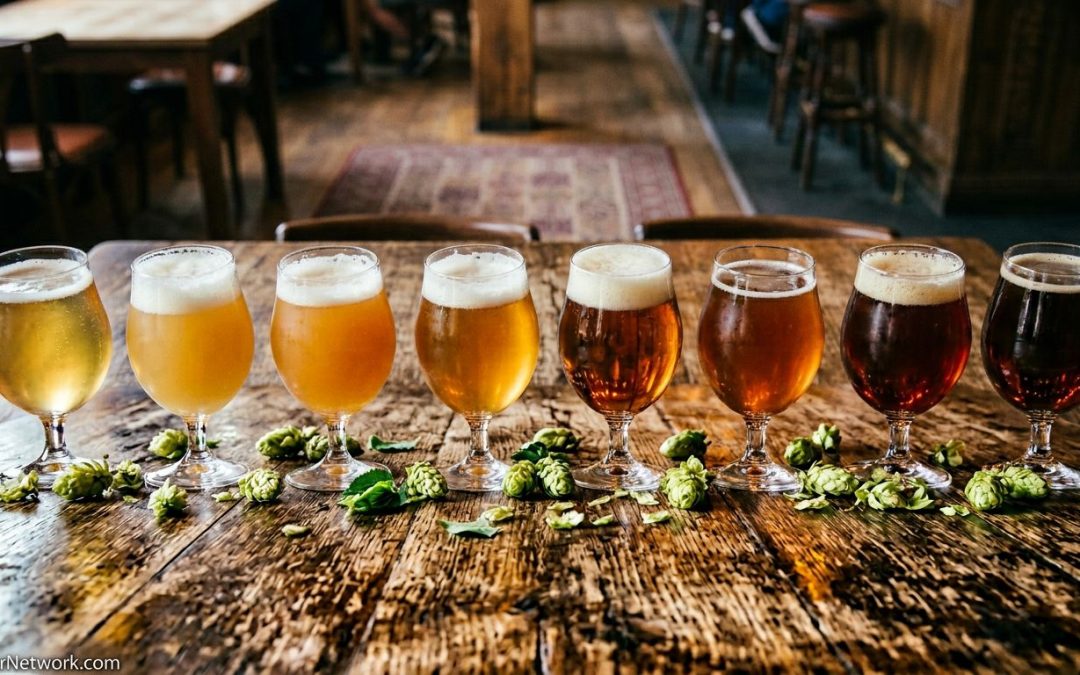
Theory is great, but beer is meant to be tasted. We picked up eight widely available hoppy beers spanning the full spectrum from classic West Coast to full haze, low IBU to high IBU, moderate ABV to imperial strength, and tasted them side by side.
The goal: see if IBU tracks with perceived bitterness, how malt and alcohol affect the experience, and whether the West Coast vs. hazy distinction holds up in a blind-ish comparison.
Here's the lineup, arranged from lowest to highest stated IBU:
| Beer | Style | IBU (est.) | ABV |
|---|---|---|---|
| Sierra Nevada Hazy Little Thing | Hazy IPA | ~35 | 6.7% |
| Other Half Green City | Hazy DIPA | ~45 | 7.0% |
| Firestone Walker Mind Haze | Hazy IPA | ~50 | 6.2% |
| Sierra Nevada Torpedo | West Coast IPA | ~70 | 7.2% |
| Stone IPA | West Coast IPA | ~71 | 6.9% |
| Bell's Two Hearted Ale | American IPA | ~55 | 7.0% |
| Dogfish Head 90 Minute IPA | Imperial IPA | ~90 | 9.0% |
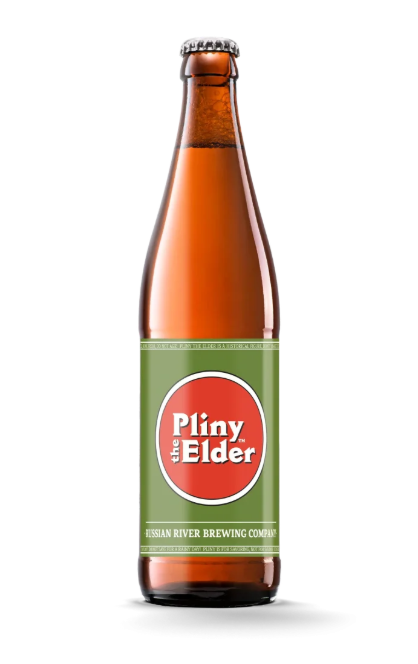
| Russian River Pliny the Elder | Double IPA | ~100 | 8.0% |
What we found:
The three hazy beers, Hazy Little Thing, Green City, and Mind Haze, were the least bitter-tasting of the group despite being loaded with hop flavor and aroma. Tropical fruit, citrus, and stone fruit dominated. Green City in particular was remarkably juicy and soft for a double IPA. These beers proved the hazy thesis: you can be intensely hoppy without being particularly bitter.
Moving into the West Coast entries, the jump in perceived bitterness was immediate. Torpedo and Stone IPA both delivered that classic piney, resinous, grapefruit-pith bitterness that defined the American craft beer movement. Of the two, Stone had a slightly drier finish, while Torpedo's slightly higher ABV gave it a bit more body to round out the hop bite.
Bell's Two Hearted was the bridge beer of the group, a single-hop Centennial IPA that splits the difference between old-school bitterness and modern drinkability. At 55 IBU, it didn't taste as bitter as Torpedo or Stone despite a similar ABV, and its malt balance was noticeably rounder. There's a reason it's consistently ranked as one of America's best beers.
The two biggest beers told the most interesting story. Dogfish Head 90 Minute, with its continuous hopping process and 9% ABV, was intensely hoppy but remarkably balanced. That high alcohol and caramel malt presence smoothed out the 90 IBUs in a way that made it taste gentler than the 70-IBU Torpedo. This is exactly what the science predicts: more malt backbone and alcohol warmth moderates perceived bitterness.
And Pliny the Elder? At roughly 100 IBU and 8% ABV, it remains one of the most impressive balancing acts in craft beer. It's bitter, it's hoppy, and it's complex, but it's also clean and drinkable in a way that a 100 IBU beer has no right to be. The malt is just present enough to give the hops a platform without competing with them.
The takeaway: IBU is a rough guideline, not a flavor prediction. A 45 IBU hazy DIPA can taste less bitter than a 35 IBU dry lager. A 100 IBU double IPA can taste smoother than a 70 IBU West Coast IPA. What matters is the whole picture: malt, alcohol, water chemistry, carbonation, hop variety, and when those hops are added.
So How Hoppy Can a Beer Really Get?
The honest answer: it depends on what you mean by "hoppy."
If you mean bitter, there's a real physical ceiling around 100 to 120 IBU in solubility, and a perceptual ceiling around 80 to 100 IBU for most tasters. Beyond that, you're just adding hops that aren't contributing to bitterness.
If you mean hop flavor and aroma, the sky's the limit. Modern dry-hopping techniques, new hop varieties, and innovations like cryo hops (where the lupulin glands are separated from the plant material) allow brewers to pack more hop character into a beer than ever before, without necessarily increasing bitterness.
The IBU arms race of the early craft beer era was fun, but it was built on an incomplete understanding of how we taste beer. Today's best hoppy beers aren't chasing a number; they're chasing balance, drinkability, and the kind of hop expression that makes you want another sip. Whether that comes in a clear, bitter West Coast IPA or a hazy, juicy NEIPA, the science says the same thing: more isn't always more, but better is always better.
Have a favorite hoppy beer we should try? Join YourBeerNetwork and let us know in the comments.
© 2026 by YourBeerNetwork.com. All rights reserved. No part of this document may be reproduced or transmitted in any form or by any means, electronic, mechanical, photocopying, recording, or otherwise, without prior written permission.
Disclaimer: The information in this article is for educational and entertainment purposes only. YourBeerNetwork.com does not encourage excessive alcohol consumption. Please drink responsibly and in accordance with all applicable laws. You must be of legal drinking age in your jurisdiction to consume alcoholic beverages.
