
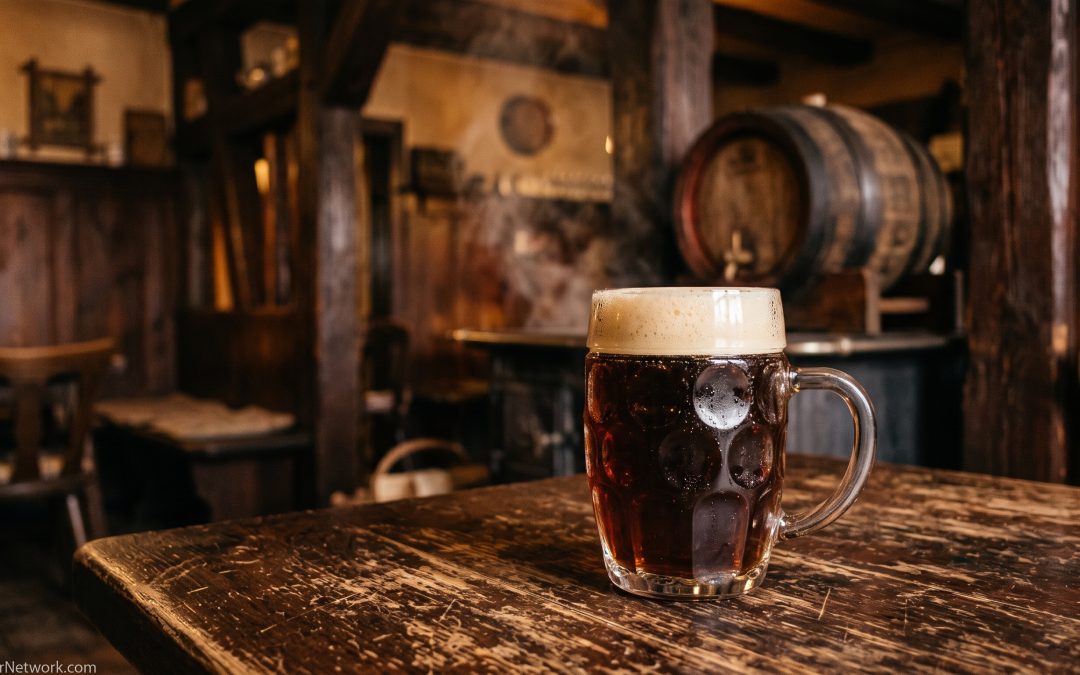
Some beers divide a room. Pour a glass of Aecht Schlenkerla Rauchbier Märzen for a group of friends and someone will say campfire, someone else will say smoked ham, and at least one person will quietly ask for a refill. This beer from Bamberg, Germany has become the benchmark for an entire style. Generations after it first won over travelers, it is still one of the most talked-about classic beers on the planet.
Here is what makes it so special, where it comes from, and how to get the most out of your first (or fiftieth) glass.
What Is Rauchbier?
Rauchbier simply means “smoke beer” in German. The smoky flavor comes from the malt, which is dried over an open beechwood fire instead of in a modern smokeless kiln. That smoke clings to the grain and carries through brewing into the finished beer.
The BJCP Rauchbier style guidelines describe the classic version as a smoked Märzen: a toasty, malty amber lager with restrained bitterness and a clean, fairly dry finish. The smoke can range from gentle to intense, and the guidelines point out that malt and smoke tend to trade places. When one rises, the other usually steps back.
When All Beer Tasted a Little Smoky
Smoked beer was not invented as a novelty. For most of brewing history, drying malt meant using fire, so most beer carried at least some smoke. In an interview about the history of Schlenkerla, sixth-generation brewmaster Matthias Trum explains that smoked beer was once the norm rather than the exception.
That changed as smokeless malt drying spread through Europe beginning in the 1600s. Clean, pale malts took over, and smoked beer faded almost everywhere. Bamberg was the exception. A handful of its breweries kept the old fires burning, and Schlenkerla became the most famous of them. The brewery even celebrates an annual Smokebeer Preservation Day each July 23, marking the 1635 date when a smoke-free malt drying process was patented.
The Tavern Behind the Beer
The Schlenkerla tavern sits in Bamberg’s old town, below the cathedral, in a building with deep roots. According to the Schlenkerla building history, the property was first documented in 1405 as the “house of the blue lion,” and parts of the cellars beneath the brewery date back to the 12th century.
The brewery’s official registered name is Heller-Bräu, but almost nobody calls it that. The Schlenkerla family chronicle explains that locals nicknamed the place after a former owner, Andreas Graser, whose uneven way of walking earned him the label “Schlenkerla.” The term comes from an old Franconian expression for someone who walks with a sway. The name stuck, and today the Trum family runs the brewery in the sixth generation of the same family line.
If you ever make the trip, the tavern experience is part of the legend. The flagship Märzen is still tapped by gravity straight from wooden casks, served under centuries-old ceilings in rooms that feel more like a time capsule than a bar.
How Schlenkerla Gets Its Smoke
Many modern brewers buy smoked malt from a supplier. Schlenkerla smokes its own. The brewery runs its own maltings, where barley is dried over burning beechwood harvested in Franconia. This is the heart of the beer’s character, and the reason it tastes so different from smoked beers made elsewhere.
The classic Aecht Schlenkerla Rauchbier Märzen is a dark, bottom-fermented lager at 5.1% ABV, brewed with that house-smoked malt. After fermentation it matures in the cool rock cellars beneath the city. The result pours a deep mahogany color with a creamy tan head. Expect bold smoke up front, followed by toasty malt, a touch of sweetness, and a surprisingly dry finish that keeps you reaching for another sip.
Beyond the Märzen: The Schlenkerla Lineup
The Märzen gets most of the attention, but the full range of Schlenkerla smoked beers is worth exploring:
- Helles Schlenkerla Lager: A pale lager brewed without any smoked malt. It still carries a light smoky note, picked up from the brewery’s equipment and yeast.
- Schlenkerla Weizen: A smoked wheat beer that blends banana and clove notes with gentle smoke.
- Aecht Schlenkerla Urbock: A stronger smoked bock, traditionally brewed once a year for an autumn celebration at the tavern.
- Aecht Schlenkerla Eiche: A seasonal doppelbock made with oak-smoked malt instead of beech, with a softer, rounder smoke character.
- Fastenbier and Kräusen: Seasonal and specialty releases that turn up occasionally in the tavern and in export.
A popular way to work through the range is to start with the Helles, move to the Weizen, and finish with the Märzen. Building up the smoke gradually helps your palate adjust.
How to Taste It Like a Local
Rauchbier rewards patience. Plenty of first-time drinkers find the opening sip startling, and plenty of longtime fans will tell you the beer clicks somewhere around the third sip or the second glass. Give it a fair chance before you decide.
A few tips help:
- Serve it cool, not ice cold. Around 46 to 50°F lets the malt sweetness balance the smoke.
- Use a glass with some room. A mug, stein, or wide tulip lets the aroma open up.
- Eat with it. Smoked beer was made for food. Try it with bratwurst, pulled pork, smoked cheeses, roasted root vegetables, or anything off the grill. The beer makes savory food taste smokier, and the food softens the beer’s edges.
Finding Schlenkerla in the United States
Schlenkerla is imported into the U.S. and shows up at well-stocked bottle shops and German-leaning beer bars. Because it is a lager meant to be enjoyed fresh, check for a recent date and buy from a shop that stores its beer properly. Our Beer Places directory is growing, so keep an eye on it for bottle shops and beer bars near you.
Is Schlenkerla Worth It?
Absolutely. Whether you end up loving it or calling it liquid bacon, Aecht Schlenkerla Rauchbier is a living link to how beer tasted for centuries, still brewed in the same city by the same family. Every serious beer lover should try it at least once.
Have you tried Schlenkerla? Was it love at first sip, or did it take a few rounds? Tell us in the comments, send us your own review, and join the network to connect with fellow beer lovers.
© 2026 by YourBeerNetwork.com All rights reserved. No part of this document may be reproduced or transmitted in any form or by any means, electronic, mechanical, photocopying, recording, or otherwise, without prior written permission.
Disclaimer: This article is for informational purposes only. YourBeerNetwork.com is not affiliated with Schlenkerla or Heller-Bräu Trum. Product availability, ABV, and seasonal releases may change. Please drink responsibly and only if you are of legal drinking age.
