
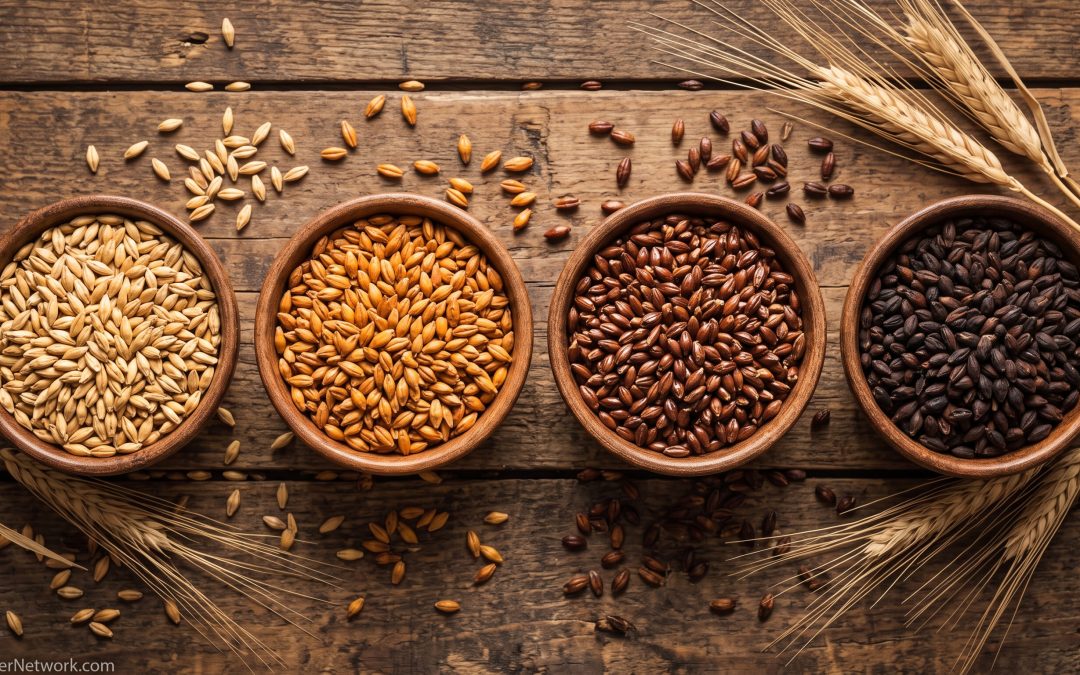
Hops get the headlines, but malt does most of the work. Malt gives beer its color, its body, its sweetness, its toasty and roasty flavors, and the sugar that yeast turns into alcohol. If you’ve ever wondered why a pilsner is pale gold and a stout is nearly black, the answer starts in a malthouse long before the brewer turns on a burner.
Here’s how malt is made, the main types you’ll see on beer labels and recipes, and how to taste the difference for yourself.
What Is Malt?
Malt is grain that has been partially sprouted and then dried. Barley is the classic brewing grain, though wheat, rye, and oats are malted too. Barley earns its top spot for two reasons. According to Montana State University’s barley breeding program, barley has high enzymatic potential, and its husk protects the grain during germination. Later, during brewing, that same husk forms a natural filter bed.
Why sprout grain at all? Raw barley stores its energy as starch locked inside tough cell walls. Yeast can’t ferment starch. Malting unlocks the grain and builds the enzymes that will later convert starch into fermentable sugar in the brewer’s mash.
The Three Stages of Malting
Steeping
Malting begins by soaking raw barley in water. Commercial maltsters alternate wet periods with air rests so the grain can breathe. The barley absorbs water until it’s ready to grow, and it’s considered finished when most kernels show a tiny white rootlet called a “chit.” In a behind-the-scenes series from Briess, the maltster explains that this chitted barley is then moved into germination compartments.
Germination
During germination, the barley grows under carefully controlled conditions. Cool, humidified air is drawn through the grain bed. Inside each kernel, enzymes break down cell walls and proteins in a process maltsters call modification. Briess notes that germinating barley fills the air with aromas of wet grain and, surprisingly, cucumber. Visitors are even invited to chew kernels and taste how the flavor changes from day to day.
Kilning
Once the grain is properly modified, the maltster stops germination by drying it in a kiln. This is where much of malt’s personality is born. Gentle, low-temperature kilning produces pale malt that keeps most of its enzymes. Hotter, longer kilning creates darker malt with deeper bready, toasty, and caramel flavors, but fewer enzymes.
The fuel matters too. Kilning over an open beechwood fire creates the smoked malt behind Bamberg’s famous Aecht Schlenkerla Rauchbier. Kilning over peat creates the smoky malt used in many Scotch whiskies.
The Main Types of Malt
Base Malts
Base malts make up most of the grain bill in nearly every beer. They’re lightly kilned, pale in color, and rich in enzymes, so they can convert their own starches into sugar in the mash. Common examples include:
- Pilsner malt: Very pale, with a delicate, sweet, grainy flavor. It’s the backbone of pilsners and Belgian golden ales.
- Pale ale malt and two-row: Slightly darker, with a fuller malt flavor. These are workhorses for American and British ales.
- Vienna and Munich malts: Kilned a bit hotter for golden-orange color and bready, toasty richness. They’re the foundation of Märzen, bock, and Oktoberfest beers.
Caramel and Crystal Malts
Caramel malts are made differently. The wet, germinated grain is heated so that its starches convert to sugar inside the husk, and then it’s dried or roasted until those sugars caramelize and set. The result adds sweetness, body, and flavors that range from honey and toffee to burnt sugar and dried fruit. A little goes a long way, so brewers typically use these malts in small amounts.
Roasted Malts
Roasted malts are taken to high temperatures in a roaster, much like coffee beans. Chocolate malt brings cocoa and coffee notes. Black malt adds deep color with a sharper roast. Roasted barley, which is technically unmalted grain, gives Irish dry stout its signature dry, espresso-like bite. These malts have no enzymes left, so they’re used purely for color and flavor.
Specialty and Smoked Malts
Beyond these categories are dozens of specialty malts: biscuit and aromatic malts, honey malt, acidulated malt, and smoked malts kilned over beech, oak, cherry wood, or peat. Each adds a specific note that helps brewers fine-tune a recipe.
How Malt Shapes the Beer in Your Glass
- Color: Malt is the main source of beer color. Brewers measure malt color in degrees Lovibond and finished beer color in SRM or EBC units. A pilsner might be under 4 SRM, while a stout can top 40.
- Flavor: Malt flavors include cracker, bread crust, biscuit, toast, caramel, toffee, raisin, chocolate, and coffee.
- Body and mouthfeel: Some malt sugars aren’t fermentable, so they stay in the finished beer and add body and sweetness.
- Alcohol: More malt means more fermentable sugar, which means a stronger beer.
- Foam: Proteins from malt help create and hold a beer’s head.
A Name Worth Knowing
Many American craft beer fans have tasted Briess malt without realizing it. The company traces its malting roots to the Moravia region of what is now the Czech Republic and later built its American operations in Chilton, Wisconsin. In a Briess podcast on the company’s history, the company says it was the only maltster supplying craft brewers until the early 1990s. That makes it a quiet partner in the rise of American craft beer.
Taste It Yourself
The best way to learn malt is to taste it. Visit a local homebrew shop and ask to chew a few kernels each of pilsner, Munich, crystal, and chocolate malt. The differences are striking and will change how you taste beer. For a liquid comparison, line up a pilsner, a Märzen, an amber ale, and a stout, and notice how the malt character builds with each glass.
What’s Your Favorite Malt-Forward Beer?
Are you a fan of rich bocks, toasty Märzens, or roasty stouts? Tell us your favorite malt-driven beer in the comments, send us an article about your own brewing adventures, and join the network to connect with fellow beer lovers.
© 2026 by YourBeerNetwork.com All rights reserved. No part of this document may be reproduced or transmitted in any form or by any means, electronic, mechanical, photocopying, recording, or otherwise, without prior written permission.
Disclaimer: This article is for informational and educational purposes only. YourBeerNetwork.com is not affiliated with Briess Malt & Ingredients Co. or any other company mentioned. Please enjoy beer responsibly and only if you are of legal drinking age.
