
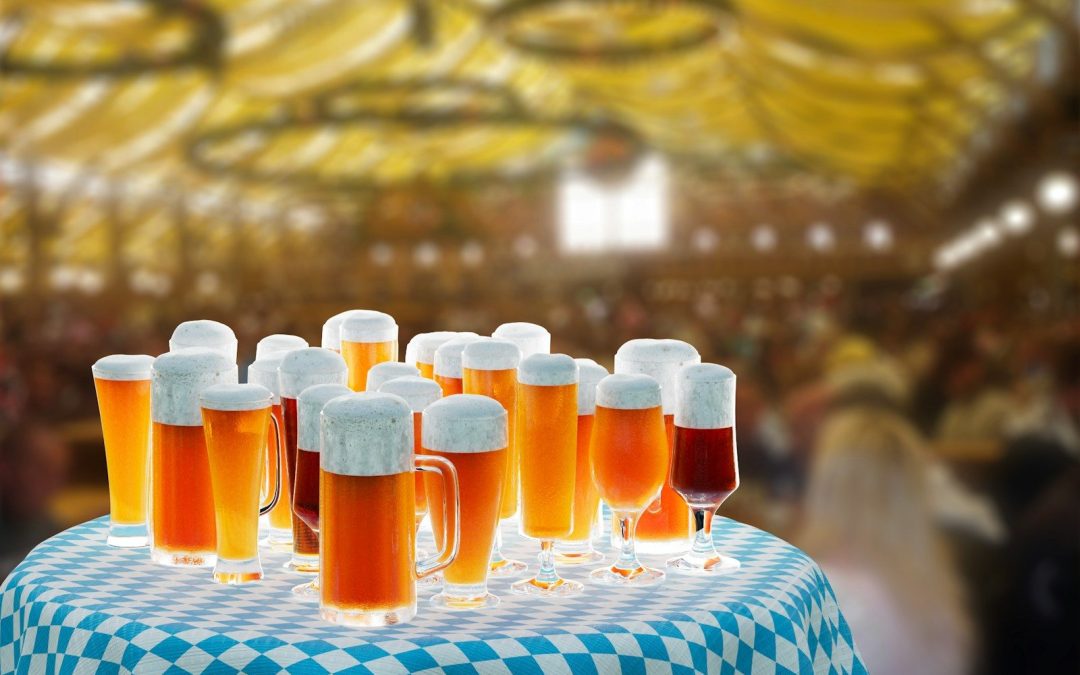
Every fall, "Oktoberfest" beers fill store shelves and tap lists. Most drinkers picture a copper-colored, toasty lager, and that beer is real. But it is not what most people actually drink in the tents in Munich today. The modern Oktoberfest is poured as a golden, lighter-tasting lager called Festbier.
So which one is the "real" Oktoberfest beer? Both, depending on when you ask. Here is how Märzen and Festbier differ, how one replaced the other in Munich, and how to tell what you are buying.
Märzen: The Original March Beer
Märzen means "March beer." Before refrigeration, Bavarian brewers made a stronger beer in March, the last good brewing month before summer heat made fermentation unreliable. They stored it in cold caves through the warm months, a long cold maturation that defines lager brewing, and tapped what was left in the fall.
The name is older than the style we know today. According to the BJCP's Märzen guidelines, early Märzens were dark brown, and the word signaled a strength rather than a specific recipe. The amber version traces back to a lager developed by Munich's Spaten brewery in 1841, around the same time Vienna lager emerged.
That amber Märzen became the Oktoberfest beer. The BJCP notes it was the style served at the festival from 1872 until 1990. Expect an amber-orange to copper color, a rich, toasty, bread-crust malt flavor, restrained bitterness, and a surprisingly dry finish for such a malty beer. It typically lands between 5.6% and 6.3% ABV.
Festbier: How Golden Took Over the Tents
In the mid-1970s, Paulaner decided the traditional Oktoberfest Märzen was too filling for a festival where people drink liter after liter. The brewery developed a paler, lighter-bodied version that was still malty but far easier to drink over a long day. The BJCP's Festbier guidelines report that since 1990, most of the beer served at Oktoberfest in Munich has been this golden style.
Festbier pours deep yellow to gold, with a soft, doughy malt richness, a light floral or herbal hop character, and a crisp finish that keeps you reaching for the next sip. Strength is similar to Märzen, usually 5.8% to 6.3% ABV, which is part of why it goes down so dangerously easily.
Only six breweries can pour at the Munich festival: Augustiner, Hacker-Pschorr, Hofbräu, Löwenbräu, Paulaner, and Spaten. As the official Oktoberfest site explains, beer served there must come from one of these Munich breweries and meet the specifications of the protected "Oktoberfestbier" brand. That protection is also why brewers elsewhere often use the name Festbier.
Märzen vs. Festbier at a Glance
The two beers share a strength range and a malt-forward balance, but they taste and look quite different in the glass.
| Märzen | Festbier | |
|---|---|---|
| Color | Amber-orange to copper | Deep yellow to gold |
| Malt character | Rich, toasty, bread crust | Soft, doughy, lightly toasty |
| Body | Medium, smooth, creamy | Medium, lighter and crisper |
| Bitterness | Restrained (18 to 24 IBU) | Restrained (18 to 25 IBU) |
| Typical ABV | 5.6% to 6.3% | 5.8% to 6.3% |
| At Munich's Oktoberfest | 1872 to 1990 | Since 1990 |
Ranges are based on the BJCP 2021 Style Guidelines.
What "Oktoberfest" Means on an American Label
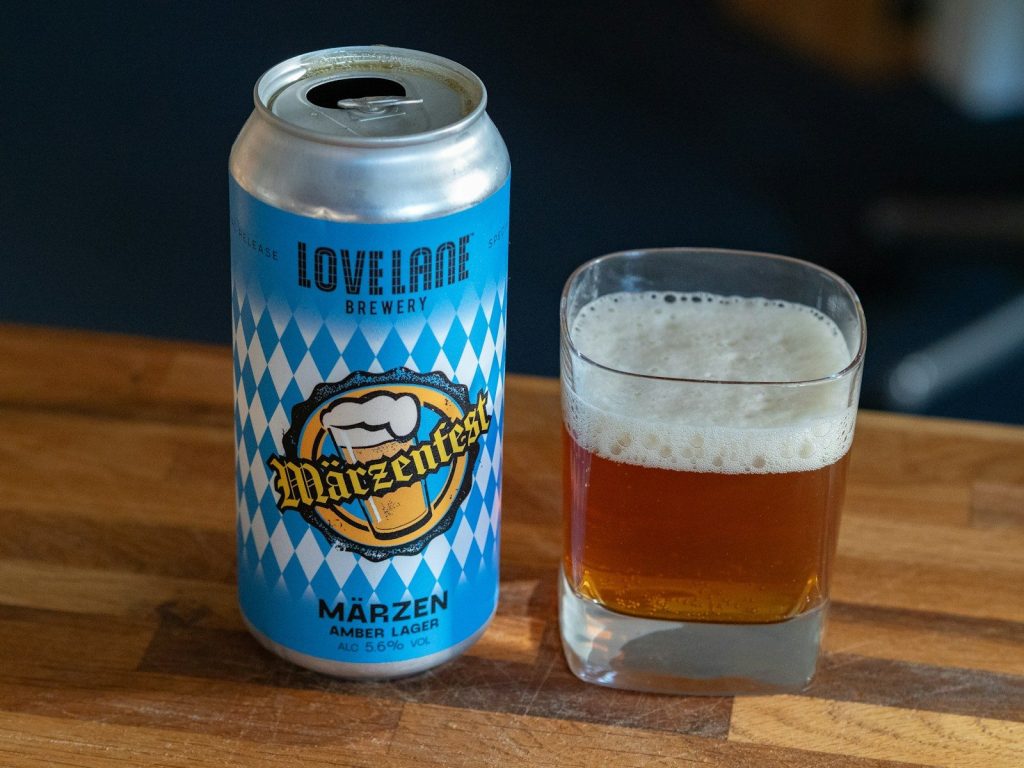
Here is the twist: most beers labeled "Oktoberfest" in the United States are Märzens. American craft brewers adopted the amber style decades ago, and German breweries that export to the U.S. have often sent the amber version too, because that is what American drinkers expect.
So when you pick up an Oktoberfest six-pack at your local bottle shop, you are usually getting a toasty, copper-colored Märzen. If you want to taste what Munich drinks in the tents today, look for beers labeled Festbier, Wiesn, or Oktoberfestbier from the Munich breweries. A side-by-side tasting of one of each is the fastest way to learn the difference.
How to Taste and Pair Them
Serve both around 45 to 50°F so the malt flavors can open up. A dimpled mug or a classic stein is the traditional choice, though any clean pint glass works.
When tasting, pour the Festbier first. Its lighter malt character can get lost after the richer Märzen. Notice the color, then the aroma: bread dough and light honey in the Festbier, toast and bread crust in the Märzen. Pay attention to the finish, too. Both should end cleaner and drier than you might expect.
Both beers were made for food. Classic pairings include soft pretzels with mustard, roast chicken, bratwurst, pork schnitzel, and sharp cheeses. Märzen's toasty depth is great with roast pork and caramelized onions, while Festbier's crisp finish cuts through fried and salty bar snacks.
Raise a Stein
There is no wrong answer here. Märzen carries more than a century of Oktoberfest history, and Festbier is what Munich pours today. The best way to celebrate is to try both and decide for yourself.
Which do you prefer, the toasty amber Märzen or the golden Festbier? Tell us your favorite in the comments, send us an article about your own Oktoberfest traditions, and join the YourBeerNetwork.com community to connect with fellow beer lovers. Prost!
© 2026 by YourBeerNetwork.com All rights reserved. No part of this document may be reproduced or transmitted in any form or by any means, electronic, mechanical, photocopying, recording, or otherwise, without prior written permission.
Disclaimer: This article is for informational and entertainment purposes only. Style ranges are general guidelines, and individual beers vary by brewery. Please enjoy alcohol responsibly and only if you are of legal drinking age.
