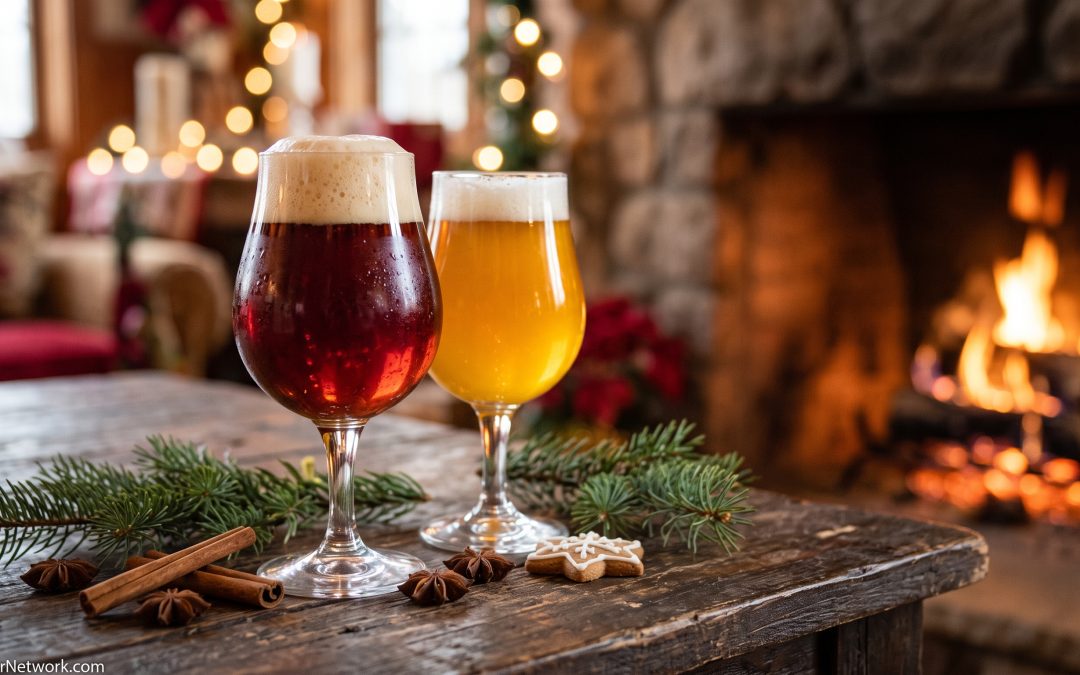
Every fall, something wonderful happens in the beer aisle. Pumpkin beers make their exit, and the shelves fill with Christmas ales, winter warmers, and festive bottles that only appear once a year. Some are dark and spiced like a slice of fruitcake. Others are golden, bright, and celebratory. A few are big enough to sip slowly by the fire all evening.
Here is a guide to the world of holiday and winter seasonal beers: what makes them special, the main styles to look for, and how to enjoy them all season long.
What Makes a Beer a Holiday Beer?
There is no single holiday beer style. Instead, it is a tradition of brewing something special for the coldest, most social time of the year. The BJCP Winter Seasonal Beer guidelines describe the typical version as stronger, darker, and spiced, with a rich body and a warming finish suited to cold weather. The guidelines also note an interesting split. Spiced holiday beers are mainly an American and Belgian tradition, while English and German brewers have historically kept spices out of their winter beers.
The common threads are richness and comfort. Holiday beers tend to have more malt, more alcohol, and more character than a brewery’s everyday lineup, because they are made for sharing with friends and family when the nights are long.
The Main Styles to Look For
American Christmas Ales
These are the beers most people picture when they think of holiday beer. They are usually amber to brown ales brewed with spices such as cinnamon, nutmeg, ginger, and clove, and sometimes with honey or fruit. Think gingerbread and mulled cider in beer form. Classic examples include Great Lakes Christmas Ale from Cleveland, Harpoon Winter Warmer, and Tröegs Mad Elf, a strong ruby ale brewed with cherries and honey.
English Winter Warmers
The English approach is all about malt. Winter warmers are rich, amber to dark ales with flavors of toffee, caramel, dried fruit, and toasted bread, balanced by earthy hops. Most have no added spices at all. Their warmth comes from the malt and a slightly higher alcohol content, which makes them a great choice for anyone who finds spiced beers too much like a candle shop.
Belgian Christmas Beers
Belgium may be the world capital of holiday beer. Many Belgian breweries release a Christmas or Noël beer each year, often strong, dark, and complex, with notes of dark fruit, brown sugar, and gentle spice from both added ingredients and expressive Belgian yeast. Look for St. Bernardus Christmas Ale, Delirium Noël, and N’ice Chouffe.
Not every holiday beer is dark, though. Some brewers make golden Belgian-style holiday ales with honey, pilsner malt, and fruity yeast character. They are lighter in color but still festive, and they make an elegant alternative to champagne at a holiday party.
German Holiday Lagers and Doppelbocks
German breweries celebrate the season with stronger lagers rather than spiced ales. A Weihnachtsbier (Christmas beer) is typically a richer, slightly stronger version of a brewery’s regular lager. The doppelbock, a deep brown, malty lager with flavors of bread crust, caramel, and dark fruit, is another winter favorite. Ayinger Celebrator is one of the most beloved examples, and its name says it all.
Scandinavian Juleøl
In Norway and Denmark, the winter holiday beer tradition reaches back more than a thousand years. The BJCP’s look at Christmas beer traditions traces the Norwegian juleøl back to a Viking-era king who merged pagan winter solstice brewing customs with Christian celebrations. Modern versions are usually dark, malty, and smooth, built to go with hearty holiday meals.
Hoppy Holiday Ales
For hop lovers, the season brings a different kind of gift. Some of the most anticipated winter releases skip the spices entirely and focus on fresh, bold hops. Writing for Brew Your Own, a longtime beer judge points to Sierra Nevada Celebration and Bigfoot as favorite winter seasonals that are not spiced at all. Celebration in particular has become a holiday tradition for IPA fans, with its piney, citrusy fresh-hop character. If you love hops, our guide to IPA styles explains what makes these beers tick.
Barrel-Aged Stouts and Big Sippers
Winter is also prime time for the biggest beers of the year: imperial stouts, barleywines, and barrel-aged releases with flavors of chocolate, vanilla, coffee, and toffee. These are the beers to open on a snowy night and share in small pours. Many are strong enough to age for a year or more, so consider buying two, one to drink now and one to open next winter.
How to Enjoy Holiday Beers
- Serve them a little warmer. Rich winter beers show their best flavors at around 50 to 55°F. Straight from a very cold fridge, the malt and spice can taste muted.
- Use the right glass. A tulip, goblet, or snifter concentrates the aroma, which is half the fun with these beers.
- Pair them with holiday food. Spiced ales go beautifully with gingerbread and pumpkin pie. Doppelbocks and winter warmers love roast pork, ham, and sharp cheddar. Imperial stouts are a natural match for chocolate desserts.
- Share the big ones. Many holiday beers run 8% ABV or higher. Splitting a bottle with friends lets everyone taste more without overdoing it.
Host a Holiday Beer Tasting
A holiday beer tasting is one of the easiest and most fun parties to throw. Ask each guest to bring a different winter seasonal, then taste them from lightest to darkest: golden Belgian holiday ale first, then amber Christmas ales and winter warmers, then doppelbocks and Belgian Noël beers, and finally the imperial stouts. Pour small samples, set out cheese, cookies, and roasted nuts, and have everyone vote for a favorite.
Shop Early
Holiday beers usually start arriving in October and November, and the most popular ones can sell out well before Christmas. Visit a good bottle shop early in the season, check packaging dates, and pick up anything you have been waiting all year to try. Our Beer Places directory is growing, so keep an eye on it for bottle shops and beer bars near you.
What Is Your Favorite Holiday Beer?
Do you have a Christmas ale you wait for all year, or a family tradition of opening a special bottle on the holidays? Tell us in the comments, send us a review of your favorite winter seasonal, and join the network to connect with fellow beer lovers.
© 2026 by YourBeerNetwork.com All rights reserved. No part of this document may be reproduced or transmitted in any form or by any means, electronic, mechanical, photocopying, recording, or otherwise, without prior written permission.
Disclaimer: This article is for informational purposes only. YourBeerNetwork.com is not affiliated with any brewery mentioned. Seasonal beer availability, recipes, and release dates vary by region and year. Please drink responsibly and only if you are of legal drinking age.
